Showing posts with label Fiction. Show all posts

Thursday, November 7, 2013

Seedfolks

By Paul Fleischman

A vacant lot, rat-infested and filled with garbage, looked like no place for a garden. Especially to a neighborhood of strangers where no one seems to care. Until one day, a young girl clears a small space and digs into the hard-packed soil to plant her precious bean seeds. Suddenly, the soil holds promise: To Curtis, who believes he can win back Lateesha's heart with a harvest of tomatoes; to Virgil's dad, who sees a fortune to be made from growing lettuce; and even to Maricela, sixteen and pregnant, wishing she were dead.
Thirteen very different voices -- old, young, Haitian, Hispanic, tough, haunted, and hopeful -- tell one amazing story about a garden that transforms a neighborhood.

Reading level: Grade 4 and up (some of the content might be for an older audience. Use your discretion. In my school the 6th graders were reading this book!)  Lexile: 710L

Suggested Delivery: 

Electronic Resources:
http://www.paulfleischman.net/ - Authors website, Here you can get information about the author, his books and contact information to get in touch with him. You can also see other works that he has written if you enjoyed Seedfolks.
http://www.harpercollins.com/browseinside/index.aspx?isbn13=9780064472074 Here you can read a sample from the book for free. You can use this to project some of the pages of the book on the board and have the students read along with you. 
http://www.scholastic.com/teachers/lesson-plan/seedfolks-lesson-plan This sight has some lesson plan ideas and information about the book.
http://www.teachervision.fen.com/tv/printables/harpercollins/seedfolks_rg.pdf Printable lesson plan with lesson ideas, reading strategies and discussion questions

There are so many great lessons and resources that can be found online for this book! I highlighted just a few of the many out there. 

Activities to Increase Comprehension:
Before Reading: Discuss society and cultures and how they integrate into communities. 
During Reading: Discuss the different character and create a character map after ever chapter to keep track of all the characters in the book (there are a lot of characters) 
This chart I found online and really liked because it makes you think about each character not only what they planted and who what are but that was their purpose in the story. 

After Reading: In the 6th grade at the school I work at, the students are writing their own chapter for the book. They can create another chapter for a character that already was mentioned or they can create their own new character to add to the book. (Relating to Language Arts)

I also thought that it would be a great idea for students to create a mural of the classroom garden after all the students create their own chapters. (Relating to Language Arts and Art)

Create a project where the students can think of the garden as a business. They can think about how much the seeds cost, how much water will be needed, how much time is spent on taking care of the plants and then how much the vegetable or flower would sell for and how much the profit would be. (Relating to Math) 

Have the students research what kinds of plants are prevalent in different cultures or parts of the world. (Relates to Social Studies and Science)

There are so many ideas that I can think of from this book. Its a simple book that you can really do a lot with.

Thursday, October 17, 2013

Mindblind


By: Jennifer Roy

Fourteen-year-old Nathaniel Clark lives in two worlds - the outside world of his family and friends and his own, special, inside Aspie world, where he's not forced to interact with people or worry about wearing his clothes right-side out. The world where he can solve mathematical problems that elude even the brightest graduate students. The world where he feels he can find his own inner truth. People say he's a genius, but Nathaniel thinks differently. According to a book he once read, a true genius uses his talent to make a contribution to the world. Nathaniel takes the definition literally, and begins his quest for genius status. "I will start, right after I wash the chocolate off my face. If I want to be seen as a genius, I should not look like an idiot."


I am currently applying to grad school to get a masters in Special Education. Having an interest in students with learning disabilities and Autism I thought that this book was really interesting. Not only does the reader get to learn a bit about Autism BUT you have the opportunity to get inside the mind of an Autistic child. Often we don't understand people that think or do things differently than we do. This book gets the reader to better understand Autism and realize that just because something is the normal to one person, doesn't mean that's normal for someone else. 
I enjoyed reading this book and learning about Nathaniel and how he perceives and interacts in the world around him and the world in his head. I think that students reading this book will have the opportunity to learn about Autism and to have a better understanding of people that are different than they are. 

Reading level: 6th and up Lexile:HL580L 

Suggested Delivery: Independent Read, Read Aloud

Electronic Resources:
http://www.jenniferroy.com/mindblind.html - This is the authors website, from this link you can find information about the book. http://www.jenniferroy.com/educational.html This link is also the authors website but is links you to other works that she has written that are instructional tools for teachers. Not only does this allow you to teach using her fiction books but you can teach using her methodology and resources. 

http://autismdigest.com/context-blindness/ This article clarifies Mind-blindness explaining that context is a key to explaining how people with Autism think. 

"It is assumed that mindblindness makes it difficult for individuals to relate to others. However, recent research on the social abilities of people with ASD is suggesting that mind blindness is but one piece of the intriguing puzzle about how individuals with ASD think and process the social world around them."

"On a conscious level context helps us think through how we should react and what choices, such as a birthday gift or a response, we should make. Context gives meaning to the stimuli our brains receive."

"Context blindness is when the autistic brain thinks in an absolute way, rather than a relative, contextually defined way"

"Example: When the doorbell rang, the mother of a seven-year-old boy with autism asked him to open the door. He opened the back door instead of the front. His reaction was logical, but his choice of door was out of context."

http://www.schooltube.com/video/43af9b2215b642f69ca9/MINDBLIND,%20by%20Jennifer%20Roy There is a trailer for the book on this website. Good way to introduce the book to students who are about to read it. 

Activities to Increase Comprehension:
Before Reading: This book is a great book to help learn about ASD but it would also be a good idea to discuss it a bit before reading the book so students don't get confused.
After Reading: Students can work on a presentation about the book including plot, characters, time line of events, setting. Using an interactive site like Prezi can be a fun was to get the information across- here is a basic example http://prezi.com/_q8qvnhuh7op/mindblind-by-jennifer-roy/
OR
Have the students research a learning disability and have them write a short story about a student with that learning disability. The students can also create a character map about their character. Have the students doing research and then becoming experts on their topic to which they are able to apply the information creatively are great skills for students to be building on. (This can also be done before reading)
OR
Students can write poems or song lyrics about subjects or topics that they are learning on school. Nathaniel wrote song lyrics for subjects that he found interesting. His songs inspired other students to enjoy and understand those subjects. Students might find this way of presenting information creative and helpful. 


Wednesday, September 11, 2013

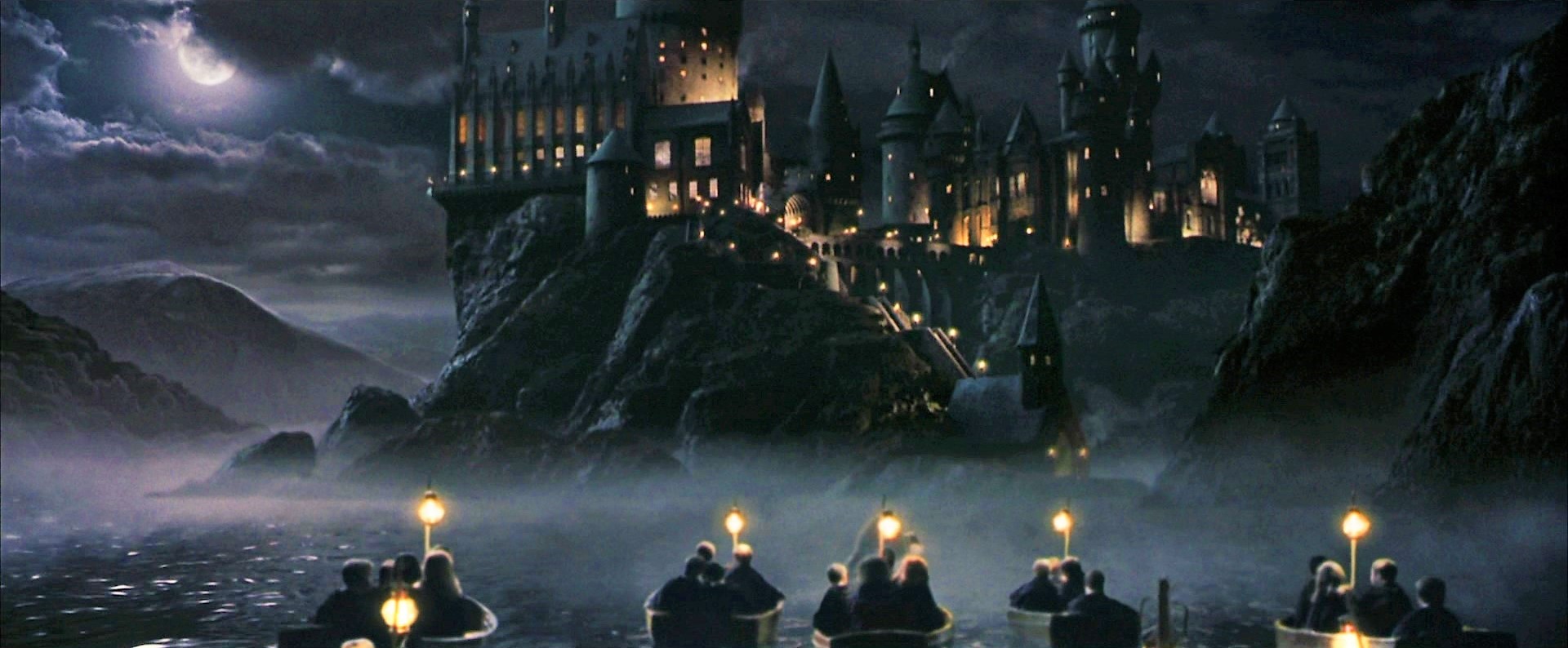
Harry Potter


By J.K.Rowling

Harry Potter is a series of seven fantasy novels written by the British author J. K. Rowling. The books chronicle the adventures of a wizard, Harry Potter, and his friends Ronald Weasley and Hermione Granger, all of whom are students at Hogwarts School of Witchcraft and Wizardry. The main story arc concerns Harry's quest to overcome the Dark wizard Lord Voldemort, whose aims are to become immortal, conquer the wizarding world, subjugate non-magical people, and destroy all those who stand in his way, especially Harry Potter.


I have just finished reading the Harry Potter Series. Yes, I know I am behind with the times. Growing up in the generation of Harry Potter and having seen and loved all the movies I thought it was time to call myself a true fan and finally - read the books!!
While I read these books for enjoyment I realized that they were really creative and can spark some creative lesson plans and thoughtful conversations in the classroom. 
When I was younger I wasn't a reader. I will admit that I only read books that I was forced to in school and  I never found anything really interesting. Now I am older and can find more pleasure in reading but the difficult thing is finding the time to read. After reading each book in the series I immediately thought, When can i start the next one! After I finished the whole series I thought- is it weird if i read them all over again?
 I know that many people have these feeling about Harry Potter and that is why they are so popular. Some kids might love these books because they feel like they finally found something that interested them, like me. That feeling in itself is wonderful and worth the reading regardless of the educational connections.


Publisher: Warner Bros 998-2007

Reading Level: 
Book 1: Harry Potter and the Sorcerer's Stone
Age Group: 9 years and up. Published in October 1998. 
Accelerated Reader (AR): Level 5.5
Lexile: 880

Book 2: Harry Potter and the Chamber of Secrets

Age Group: 9 years and up. Published in June 1999. 
Accelerated Reader (AR): Level 6.7
Lexile: 940

Book 3: Harry Potter and the Prisoner of Azkaban
Age Group: 9 years and up. Published in October 1999. 

Accelerated Reader (AR): Level 6.7
Lexile: 880

Book 4: Harry Potter and the Goblet of Fire
Age Group: 9 years and up. Published in July 2001. 
Accelerated Reader (AR): Level 6.8
Lexile: 880

Book 5: Harry Potter and the Order of the Phoenix
Age Group: 9 years and up. Published on July 21, 2003. 
 Accelerated Reader (AR): Level 7.2
Lexile: 950

Book 6: Harry Potter and the Half-Blood Prince
Age Group: 9 years and up. Published on July 16, 2005. 
Accelerated Reader (AR): Level 7.2
Lexile: 1030

Book 7: Harry Potter and the Deathly Hallows

Age Group: 9 years and up. Published on July 21, 2007. 
Accelerated Reader (AR): Level 6.9

Lexile: 980

Suggested Delivery:Independent

Vocab Because the characters in this book are wizards and witches they have their own wizarding world of vocabulary, Here is a helpful website that will help with any vocabulary questions that may arise. 

Electronic Resources:
http://harrypotter.scholastic.com/sorcerers_stone/ -This website gives a summary of each book and some fun activities that they can do. Students can answer 5 questions to figure out what their patronous will be!
http://harrypotter.wikia.com/wiki/Hogwarts_subjects - This site is all about Hogwarts and the classes that are taught there. This website will help with the after reading comprehension activity that I have.  
http://www.scholastic.com/teachers/unit/harry-potter-everything-you-need - This site offers some classroom and lesson ideas that relate to Harry Potter and the Harry Potter World. 


Activities to Increase Comprehension:

During Reading: Compare the books in the series together and have the students compare the change in the characters from book to book. The characters grow as the series goes on and that change in their behavior and attitude can be something that the students can relate to and analyse. 
After Reading: Hogwarts has so many classes that are available to it's students. Have the students pick which class they would want to take or teach and have them create a lesson or curriculum for that class. Have them so research on that class and really get interested in the subject. You can also have them connect this class to things in the Muggle world such as subjects that they have in school or professions. This activity can really relate to all the subject areas (LA,math,science, history and even art and gym)
EX: Flying
Students can research: rules, regulations, how to fly, types of brooms...
Students can come up with their own rules and tips based on what they know. 
Students can design their own broom
Students can relate it to driving class and compare and contrast
  • connect to the school subjects:
    • language arts (write a paper, course description or manual about each class). 
    • history (connect to when rulers tried to take power and rule over others ex: Holocaust)
    • science (chemistry, earth science, biology).